Staircase moves in Queensbury: safe handling tips
Posted on 10/06/2026
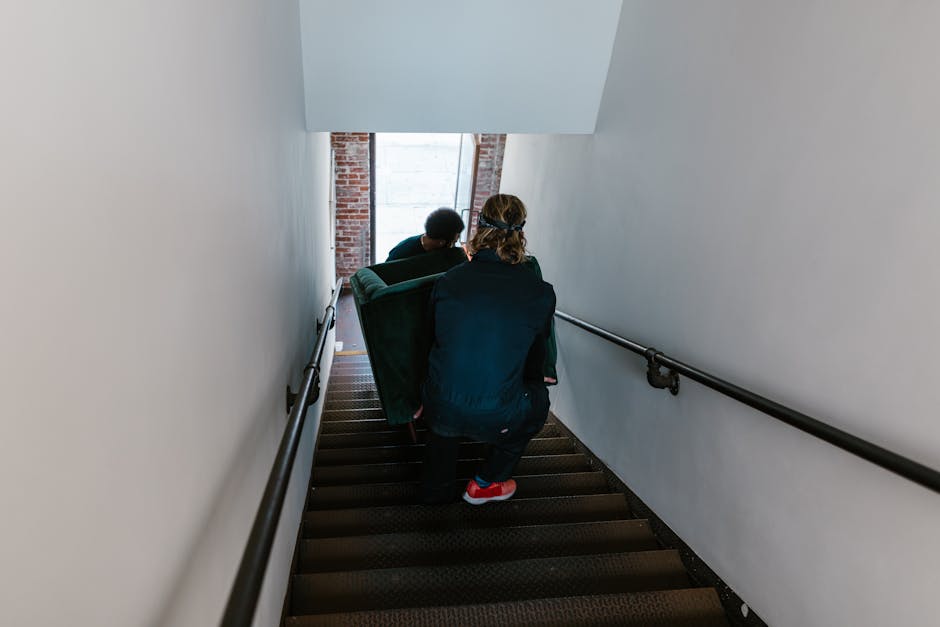
Staircases are where a move can go from manageable to awkward in seconds. One tight turn, one heavy chest of drawers, one rushed step, and suddenly the whole day feels harder than it should. If you are planning staircase moves in Queensbury, safe handling tips are not just nice to have - they are what keep people, property, and patience intact.
This guide breaks the job down in plain English. You will learn how staircase moves work, why they deserve a careful approach, what to do before you lift, and which mistakes tend to cause the biggest problems. We will also look at practical tools, sensible decision-making, and the kind of local realities that matter in Queensbury homes, flats, and shared stairwells. To be fair, most stair-related issues are preventable if you slow the process down just enough.
For a fuller moving plan beyond the staircase itself, it can also help to skim these broader moving tips for a smoother day and, if packing is still ongoing, the packing guide for a more organised house move.
![Close-up of a person wearing a dark green shirt and dark trousers, securely taping a large cardboard box sealed with packing tape. The box features a red and white caution label indicating 'Caution' and 'This Side Up' with an upward-pointing arrow, emphasizing proper handling during a home relocation. The individual is inside a house, near a staircase, preparing the box for transport or loading onto a van. The scene highlights the careful packing process involved in furniture transport and moving services. Behind the person, there is likely more packing material or additional boxes, contributing to an organized packing and moving setup. This image exemplifies the safety procedures and careful handling necessary during staircase moves in Queensbury, with [COMPANY_NAME] ensuring secure and professional furniture transport during house removals.](/pub/blogphoto/staircase-moves-in-queensbury-safe-handling-tips1.jpg)
Why Staircase moves in Queensbury: safe handling tips Matters
Staircases are awkward because they compress several risks into one narrow space. You have limited visibility, limited turning room, hard edges, awkward weights, and often a sense that other people are waiting behind you. That pressure alone can make people hurry. And hurrying is usually where the trouble starts.
In Queensbury, many moves involve flats, maisonettes, converted houses, or shared entrances where stairs are simply part of the deal. That means furniture may need to turn on a landing, carry a corner, or pass a banister with only a few centimetres to spare. Heavy items such as wardrobes, bed frames, sofas, and appliances behave differently on stairs than they do on a level floor. They can swing, tip, scrape, or shift weight in a way that catches people out.
Safe handling matters for three simple reasons:
- It reduces injury risk. Backs, shoulders, hands, knees, and feet all take strain on stairs.
- It prevents damage. Stair treads, walls, paintwork, doors, and furniture corners can all suffer in one clumsy moment.
- It keeps the move moving. If someone twists awkwardly or drops an item, the delay often spreads to the rest of the day.
There is also a quieter benefit. A calm, controlled staircase move feels better. You can hear the rhythm of the lift, the tap of footsteps, the scrape of wrapping material, and - if all goes well - not much else. No drama. No panic. Just progress.
How Staircase moves in Queensbury: safe handling tips Works
A safe staircase move is really a sequence of small decisions. You are not just lifting an item; you are managing the item's shape, weight, balance, route, and landing points. The aim is to make the object predictable. Once a piece becomes unpredictable on stairs, the risk multiplies very quickly.
The basic process usually looks like this:
- Measure and inspect the route. Check stair width, head height, turns, bannisters, and any tight corners.
- Match the item to the route. Some furniture needs to be dismantled or rotated vertically to fit.
- Prepare the item. Protect corners, remove loose parts, tape doors shut, and secure cables or drawers.
- Assign roles. One person leads, one steadies, and everyone knows when to stop.
- Move slowly and communicate. Simple words like "up", "down", "stop", and "turn" are enough.
- Reset before each turn. If the angle is wrong, pause and reposition rather than forcing it.
That sounds almost too simple, but that is the point. Staircase handling is not about heroics. It is about repeatable control. In our experience, the best moves are rarely the fastest; they are the ones where the team looks slightly over-cautious right up until the final landing, and then everything just works.
For especially tricky items, it helps to read about safe solo heavy lifting techniques and how lifting mechanics affect your body. The language is different, but the body mechanics matter all the same.
Key Benefits and Practical Advantages
When staircase moving is handled properly, the benefits go beyond avoiding a sore back. You get a cleaner move overall, fewer interruptions, and far less tension between helpers. That last one matters more than people admit. Everyone remembers the stressful bit.
1. Better safety for everyone involved
Controlled movement means fewer sudden shifts, fewer slips, and fewer collisions with the wall or banister. It also lowers the odds of foot trapping and finger pinching, which happen more easily than you might expect when a piece twists on a landing.
2. Less wear on the property
Stair walls, skirting boards, and bannisters often take the first hit. Protecting the route with covers, blankets, or temporary padding is a small effort that can save a lot of repair hassle later. A single scrape can feel oddly annoying after an otherwise decent move.
3. Better control over fragile or bulky items
Some furniture needs to be tilted, carried edge-first, or lifted in sections. A planned approach helps you keep delicate finishes intact and reduces the chance of a sudden slip. This is especially useful for tall items, awkward mattresses, and anything with glass, mirrors, or loose fittings.
4. Faster overall completion
Oddly enough, slow and methodical often ends up being quicker. Why? Because you spend less time undoing mistakes. No one wants to stop midway through a stair carry to repair a chipped corner, rewrap a strap, or recover from a near miss.
5. Less emotional strain on move day
Moving is tiring enough without adding avoidable stress. A staircase that is planned properly feels much less intimidating. You start to trust the process, and that confidence makes a real difference.
Who This Is For and When It Makes Sense
This advice is useful for a wide range of people, not just anyone moving a whole house. Staircase moves come up in all sorts of situations, and the safest approach changes depending on what you are moving, how many people are helping, and how tight the stairwell is.
You will especially benefit from this if you are:
- moving into or out of a flat with narrow internal stairs
- handling furniture in a converted Victorian or terraced property
- moving bulky items like wardrobes, sofas, beds, or white goods
- trying to protect freshly painted walls or new carpets
- working with a small team and limited equipment
- dealing with a same-day move and feeling a bit rushed
It also makes sense to slow down and plan more carefully if there is no lift, the landing is tight, or the item has to be turned while carried. That is where people often underestimate the job. The item may fit through the front door just fine, but the staircase decides everything. Annoying, yes. Common, definitely.
If your move is tied to a smaller property setup, you may also find flat removal services in Queensbury and advice for tighter local access routes helpful when planning the rest of the day.
Step-by-Step Guidance
Here is a practical staircase-moving process you can actually use. Keep it simple. Overcomplicating things on a narrow stairwell is never a winning strategy.
- Clear the route completely. Remove shoes, mats, plant pots, loose boxes, and anything that could snag a foot or block a turn.
- Check the item before you lift. Remove shelves, drawers, cushions, and detachable parts. Tape down cables and secure doors.
- Protect the stairs and item. Use blankets, wraps, corner protection, or cardboard guards where needed.
- Choose the right carrying position. Some items are safer upright; others need to be tipped slightly. Do not assume the flattest position is the best one.
- Set a lead mover. One person gives the call, controls the pace, and handles any repositioning.
- Lift with legs, not a rush. Keep the load close, move in small steps, and avoid twisting under pressure.
- Pause on the landing if needed. Landings are for regrouping. Use them.
- Communicate every turn. If the item needs to pivot, say it clearly before anyone commits to the turn.
- Place the item down carefully. Lower it in stages; do not drop it the last few inches because everyone is tired.
- Inspect the item and route. A quick check at the end can catch scuffs, dents, or loose fixings early.
A small but useful tip: if the item feels awkward before you even start, it will probably feel worse halfway up the stairs. That is not a reason to panic; it is a reason to rethink the carry, maybe split the load, or ask for additional help.
Expert Tips for Better Results
There is no magic move here, but there are habits that make a huge difference. The best movers often look calm because they are making tiny corrections all the time. That is the real skill.
Use the staircase itself as a planning tool
Look at the stairs like a route map, not a passageway. Where does the turn happen? Which side has more clearance? Is one bannister fixed more tightly than the other? On a windy or draughty landing, even a light door can swing at the wrong moment, so keep that in mind too.
Keep the load below shoulder strain where possible
High carries are tiring and unstable. If an item is above shoulder height for long, it becomes difficult to see and harder to control. Reassess the angle. Sometimes a better grip is all that is needed.
Pre-assign stop points
If you know the stairs have a mid-landing, decide in advance whether you will rest there. Waiting until someone is exhausted usually leads to poor positioning. Better to plan a controlled pause than invent one in the moment.
Protect grip before speed
Sweaty hands, slick finishes, and awkward handles are a bad mix. Gloves can help, but only if they still allow a secure grip. Too bulky and you lose feel; too thin and you lose control. It is a balancing act, a bit fiddly really.
Use short commands only
"Stop", "hold", "turn", "up", and "down" are better than long instructions. On stairs, people need clarity, not a speech.
Watch for fatigue
Fatigue makes people misjudge distance and foot placement. If the lift starts to feel unstable, stop before it gets messy. A 20-second reset can save 20 minutes.
For larger household moves, it also helps to review decluttering methods for movers and bed and mattress moving advice, because the fewer awkward items you carry upstairs, the easier life gets.
Common Mistakes to Avoid
Most staircase accidents are boringly predictable. That is what makes them frustrating. People assume the problem will be obvious, but often it is one small habit repeated under pressure.
- Trying to rush a tight turn. If the item is not aligned, forcing it almost never helps.
- Lifting without checking the weight balance. A cupboard with a heavy door or an appliance with internal movement can shift unexpectedly.
- Letting one person do too much. Stair moves work best when responsibility is shared properly.
- Ignoring the landing space. A landing is often where the toughest pivot happens, not the stairs themselves.
- Carrying without removing loose parts. Drawers, lids, shelves, and cables can turn a stable item into a problem.
- Using damaged equipment. Frayed straps, torn blankets, or bent dollies are not worth the risk.
- Wearing poor footwear. Slippers and smooth soles are a bad idea, full stop.
One of the sneakier mistakes is confidence without inspection. A piece that "looked fine" in the hallway may behave very differently once it reaches the first bend. That is just how gravity likes to keep us humble.
Tools, Resources and Recommendations
You do not need a van full of specialist gear to handle a staircase move safely, but a few well-chosen tools make the work less stressful and more secure. The aim is not to overbuy. The aim is to remove friction and reduce strain.
| Tool or item | Why it helps | Best use case |
|---|---|---|
| Moving blankets | Protect furniture edges and stair surfaces | Sofas, wardrobes, tables, bannisters |
| Straps or webbing | Improve grip and control on heavy items | Large boxes, white goods, mattress carries |
| Gloves with grip | Help with handling and reduce hand strain | Long carries, rough surfaces, awkward corners |
| Tape and fixings | Secure doors, drawers, and loose parts | Cabinets, units, appliances |
| Furniture sliders | Reduce floor drag before the stair carry | Pre-positioning items near the staircase |
| Dolly or sack truck | Useful on level sections before and after stairs | Moving boxes or lighter furniture over short distances |
Some items deserve more specialist handling than others. A piano, for example, is not a "just two people and a prayer" object. If you are moving one, read this guide to moving a piano safely and take the warning seriously.
And if your move has eaten into your storage space or left items waiting for the next stage, storage options in Queensbury can help keep the route clear while the rest of the move settles down.
Law, Compliance, Standards, or Best Practice
For most household staircase moves, there is no complicated legal process to worry about. Still, a sensible move should respect general UK health and safety practice, property access rules, and common-sense manual handling expectations. If you are moving in a shared building, you should also be mindful of neighbours, communal areas, and any building-specific arrangements.
Best practice usually means:
- avoiding unsafe lifting methods where an item clearly exceeds the team's comfort or control
- making sure walkways and stairs stay unobstructed during the move
- using suitable equipment for the weight and shape of the item
- taking care not to damage communal property, walls, and fittings
- working within the mover's own insurance and safety procedures where relevant
If you are hiring help, it is sensible to ask how they approach risk, route protection, and item handling. A straightforward explanation is a good sign. Overly vague answers are not.
For readers comparing professional support, it may also be worth reviewing insurance and safety information alongside the company's health and safety policy. Those pages should give you a clearer sense of what standards they aim to follow.
Options, Methods, or Comparison Table
There is more than one way to handle a staircase move. The best option depends on the item, the staircase, and how much time and help you have. Below is a simple comparison to help you judge what is realistic.
| Method | Strengths | Limitations | Best for |
|---|---|---|---|
| Manual carry with two or more people | Flexible, quick to set up | Requires coordination and strength | Most standard furniture and box moves |
| Strap-assisted carry | Improves balance and reduces hand strain | Needs practice and communication | Heavy but manageable items |
| Dismantle and carry in parts | Reduces bulk and tight-turn issues | Time-consuming, needs reassembly | Wardrobes, beds, modular items |
| Professional removal support | Experience, equipment, efficiency | Higher upfront cost | Bulky, fragile, or high-risk moves |
There is no single "best" method for every staircase, and that is the honest answer. If the piece is awkward, old, fragile, or unusually heavy, breaking it down or bringing in extra support is often the smart choice. Pride is rarely useful on a staircase.
Case Study or Real-World Example
Here is a typical Queensbury scenario. A customer moving from an upper-floor flat has a double mattress, a two-door wardrobe, and a sofa bed to get down a narrow staircase with one sharp turn at the mid-landing. Nothing dramatic on paper. In practice, a bit of a puzzle.
The first step was to check whether the wardrobe could be dismantled. It could, which immediately made the job calmer. The mattress was wrapped to keep it clean and easier to grip. The sofa bed, however, needed more care because of its weight distribution and metal frame. One helper took the lead, another managed the rear balance, and the item was moved in short, controlled stages rather than one continuous push.
The small win was the landing. Instead of rushing it, the team paused, reset the angle, and took the turn slowly. That one decision probably saved a wall scuff and a strained shoulder. There was a faint creak from the frame, a bit of shoe rubber on the stair edge, and then the item cleared the turn. Not glamorous. But successful. Which is what matters.
That kind of move often becomes much easier when the rest of the home is planned too. A few pieces can be pre-packed, sorted, or moved into temporary holding spaces so the staircase is dealing with only the items that truly need to pass through it.
Practical Checklist
Use this checklist before you start any staircase carry. It is simple, but it catches the obvious things before they become annoying things.
- Measure the staircase width and note any tight turns
- Check whether the item can be dismantled first
- Remove drawers, shelves, cushions, glass, and loose fittings
- Wrap corners and protect surfaces
- Clear the stair route completely
- Wear supportive footwear with grip
- Assign a lead mover and agree on commands
- Test the carry position before you commit to the route
- Use rests or landings deliberately, not by accident
- Stop immediately if the item shifts or someone loses control
- Inspect stairs, walls, and the item after the move
If you are still planning the wider move, a quick read of move-day cleaning prep and decluttering guidance can make the whole process far less cluttered and much easier to manage.
Conclusion
Staircase moves in Queensbury are rarely difficult because of one single problem. They are difficult because several little problems line up at once: a tight corner, a heavy item, a small landing, a rushed helper, a scuff-prone wall. The good news is that careful planning solves most of it. Measure first, clear the route, protect the property, communicate clearly, and never force a turn that does not feel right.
Truth be told, the safest staircase move is the one that feels almost boring. Steady hands, short steps, a quick pause on the landing, and everyone still smiling at the end. That is the win. If you need a broader moving plan, a little more storage breathing room, or support with the heavier pieces, there is nothing wrong with choosing the calmer path.
Get a free quote today and see how much you can save.
![Close-up of a person wearing a dark green shirt and dark trousers, securely taping a large cardboard box sealed with packing tape. The box features a red and white caution label indicating 'Caution' and 'This Side Up' with an upward-pointing arrow, emphasizing proper handling during a home relocation. The individual is inside a house, near a staircase, preparing the box for transport or loading onto a van. The scene highlights the careful packing process involved in furniture transport and moving services. Behind the person, there is likely more packing material or additional boxes, contributing to an organized packing and moving setup. This image exemplifies the safety procedures and careful handling necessary during staircase moves in Queensbury, with [COMPANY_NAME] ensuring secure and professional furniture transport during house removals.](/pub/blogphoto/staircase-moves-in-queensbury-safe-handling-tips3.jpg)